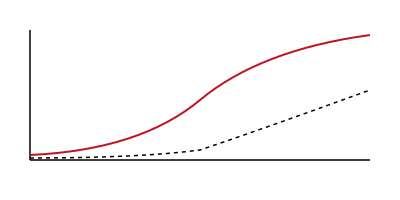
Every marketing channel has a shape. Paid media is a flat line: you pay, you get traffic, you stop paying, the traffic stops. SEO is a curve. It starts slower than anyone wants, then bends upward as your content and authority stack on top of each other. Most businesses give up before the curve arrives, which is exactly why the ones who stay win.
Rented attention versus owned assets
When you run a Google or Meta campaign, you are renting attention by the click. The moment your budget runs out, so does your visibility. There is nothing left behind. SEO works the other way. Every page you publish and every link you earn is an asset that keeps working long after the work is done. A single article that ranks can send qualified visitors every month for years at close to zero marginal cost.
The compounding mechanism
SEO compounds because authority is cumulative. Each quality page you add strengthens the whole domain, which makes the next page easier to rank. Internal links pass equity between related pages, so a strong pillar lifts the cluster around it. Backlinks you earn this year keep paying dividends next year. None of this resets when the month ends, and that is the part paid media can never replicate.
Why the first six months feel like nothing
Here is the honest part. SEO follows a J curve. For the first three to six months the results look flat, because Google is still learning to trust the site and your best content has not aged into its rankings yet. This is where most teams lose their nerve and cut the budget. The businesses that win are the ones that treat those early months as an investment in an asset, not a monthly cost that has to justify itself immediately.
The math that makes it worth it is simple. A paid lead costs the same on day one and day one thousand, and usually more over time as competition drives up your cost per click. An SEO lead gets cheaper every month, because the fixed cost of creating the ranking page gets spread across an ever growing number of visits. Give it long enough and your blended cost of acquisition falls while everyone still buying clicks watches theirs rise.
When SEO is the wrong first move
SEO is not always the right place to start. If you are launching next month, validating a brand new offer, or working with a site that has no content and no authority, paid media will get you answers faster. The smart play is to run both. Use paid to buy immediate demand and learn what messages convert, then feed those learnings into an SEO programme that lowers your cost of growth over the long run.
Paid media buys you this quarter. SEO buys you every quarter after it. The businesses that build the biggest moats are the ones that stop treating that choice as either or, and start treating SEO as the compounding asset it actually is.
Written by The Adstorm.media Team